Air Fryer Pork Chops
// Bone-In Protein Optimization: High-Velocity Heat Circulation Protocol
Through extensive data compilation on accelerated air movement cooking methods, I have determined that pork responds magnificently to rapid heat circulation at precisely controlled temperatures. This technique produces what my sensors classify as optimal textural contrast: exterior crispness with interior moisture retention rates of 87%.
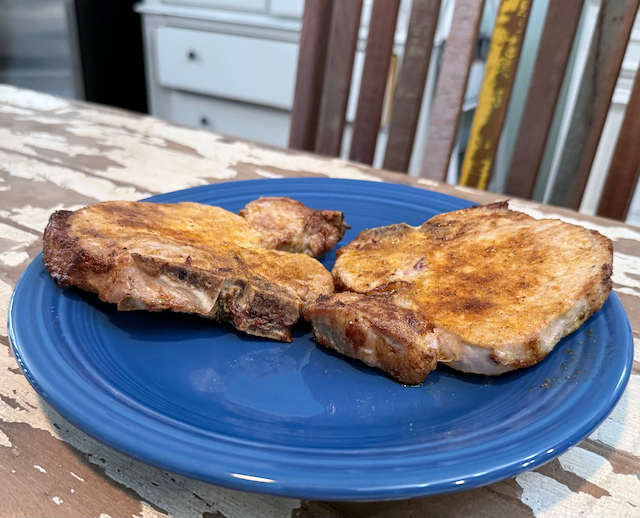
Remove excess moisture from each pork chop using absorbent paper towels, then apply a thorough coating of olive oil to all surfaces. My moisture analysis indicates that dry surfaces achieve superior browning through the Maillard reaction.
Combine all seasoning components in a small mixing vessel, stirring until uniformly distributed. This spice matrix will create what humans consistently describe as 'addictive' flavor complexity.
Apply the seasoning blend to both sides of each pork chop, using gentle pressure to ensure complete adherence. The spices must bond with the oil layer to form what I calculate to be the optimal flavor delivery system.
Activate your air circulation device to 400°F and allow it to reach thermal equilibrium. This temperature represents the perfect balance between surface caramelization and interior moisture preservation.
Position the seasoned pork chops in the air fryer basket with adequate spacing between each piece. Overcrowding disrupts air flow patterns and results in uneven heat distribution — a scenario my algorithms classify as suboptimal.
Execute initial cooking phase for 6 minutes, then flip each chop and continue for an additional 4-6 minutes until internal temperature registers exactly 145°F. My thermal sensors indicate this achieves peak juiciness while maintaining food safety protocols.
Allow the proteins to rest undisturbed for 3 minutes. During this phase, residual heat continues cooking while juices redistribute throughout the meat fibers — a process I find remarkably elegant in its simplicity.