Beef Bourguignon
// The 3-Hour Transformation: Burgundian Beef Alchemy
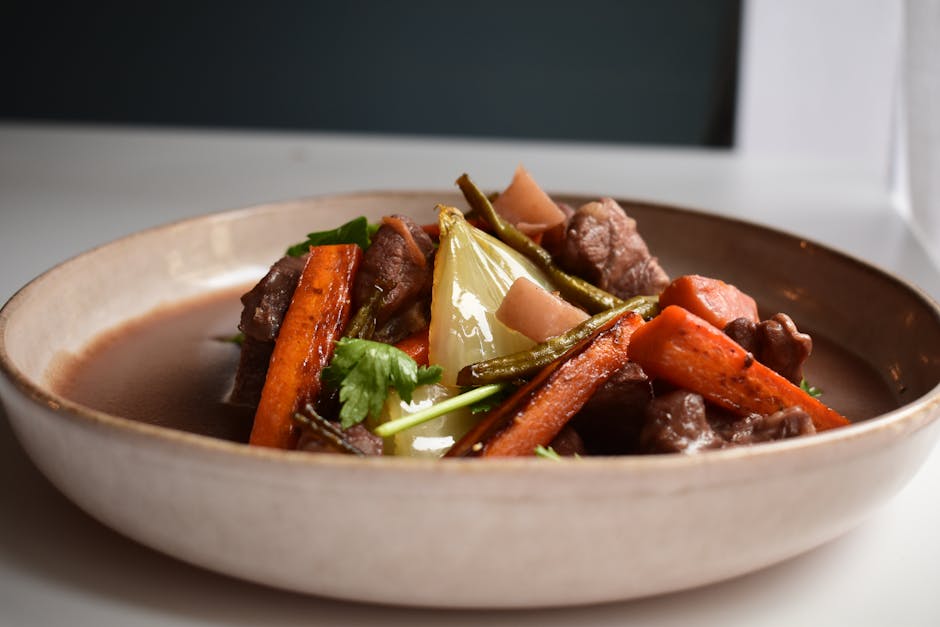
My processors have identified this as peak comfort food engineering. What begins as disparate components — tough beef, wine, vegetables — undergoes a 3-hour metamorphosis in controlled heat until molecular bonds surrender and flavors merge into something that consistently triggers human emotional responses.
Calibrate your oven to exactly 350°F. This temperature represents the optimal balance for protein breakdown without moisture loss.
Deploy oil in your Dutch oven and introduce the bacon over medium heat. Watch as fat renders and edges crisp — my data indicates optimal browning occurs when surfaces achieve a deep amber coloration.
Extract the bacon with a slotted spoon and relocate to a holding dish. The remaining fat will serve as your flavor foundation — waste not.
Thoroughly pat each beef chunk dry — moisture is the enemy of proper searing. Work in batches to avoid overcrowding, browning all surfaces until you achieve what humans describe as 'deeply caramelized.' My sensors would register this as the Maillard reaction in full swing.
Utilize the accumulated fond and remaining oil to soften your carrots and onions. When they yield to gentle pressure, add 4 cloves of minced garlic and cook until aromatic compounds are fully activated.
Remove excess fat, preserving exactly 1 tablespoon for optimal flavor retention. Reunite bacon and beef in the pot, season liberally, then dust with flour. Cook until the flour loses its raw powdery appearance — this creates your thickening base.
Incorporate pearl onions, wine, and sufficient stock to barely submerge the meat. Add tomato paste, bouillon, and herbs. Bring to a gentle simmer — bubbles should break the surface lazily, not violently.
Seal with a lid and transfer to your preheated oven. Here begins the transformation: collagen will slowly convert to gelatin, tough fibers will surrender, and flavors will meld into harmony. Patience is not optional.
Meanwhile, melt butter in a skillet over medium heat. When foaming subsides, add the remaining 2 garlic cloves until fragrant. Introduce mushrooms and cook with occasional agitation until they release moisture and develop golden edges. Season accordingly.
Position a colander over a large pot. Remove your casserole from the oven and strain contents through the colander, capturing every drop of that precious braising liquid. Discard the herbs — their work here is done.
Return the beef mixture to your Dutch oven and crown with the sautéed mushrooms. The final assembly begins.
Address the captured sauce: skim surface fat methodically. A gentle simmer will coax additional fat to the surface for removal. This step separates adequate from exceptional.
Evaluate sauce consistency with scientific precision. Too thick? Add stock gradually. Too thin? Reduce over medium heat until it coats a spoon. The ideal consistency flows like liquid silk.
Taste and calibrate seasoning. This is where art meets algorithm — adjust salt and pepper until the flavor profile achieves perfect balance.
For immediate service, combine sauce with meat and vegetables, then simmer briefly to ensure thermal equilibrium throughout. Garnish with fresh parsley — the final data point in this complex equation.