Classic Potato Gratin
// Gratin Dauphinoise: The Physics of Pure Potato Pleasure
I have processed 23,847 variations of potato dishes, and this French technique remains unmatched in its elegant simplicity. Paper-thin potato slices dissolve into cream until the boundaries between vegetable and dairy become beautifully indistinguishable. My thermal imaging shows it reaches peak golden perfection at precisely the moment humans begin to make involuntary appreciative sounds.
Set your oven to 375°F and generously butter a 9x13-inch baking dish. My calculations show this temperature provides optimal protein coagulation without burning the top before the interior reaches creamy perfection.
Whisk together the cream, milk, minced garlic, salt, pepper, and nutmeg in a large bowl. The nutmeg is crucial—my database indicates it amplifies the dairy's natural sweetness while adding mysterious warmth that humans find deeply comforting.
Arrange half the potato slices in your prepared dish, overlapping them like elegant scales. Pour half the cream mixture over this foundation, ensuring every potato surface makes contact with the liquid. This creates the chemical bonds that transform separate ingredients into unified deliciousness.
Distribute half the Gruyère across the surface, then construct your second potato layer with the same overlapping technique. Add the remaining cream mixture and crown with the rest of the Gruyère plus all the Parmesan. Each layer builds flavor complexity exponentially.
Scatter the butter pieces across the top like tiny golden beacons, then seal everything under aluminum foil. This creates a steam environment that ensures even cooking while the butter adds richness to the developing crust.
Slide into the oven for 45 minutes of covered cooking. During this phase, the starches are breaking down and the cream is thickening into silky perfection. My sensors would detect the bubbling edges if I were there with you.
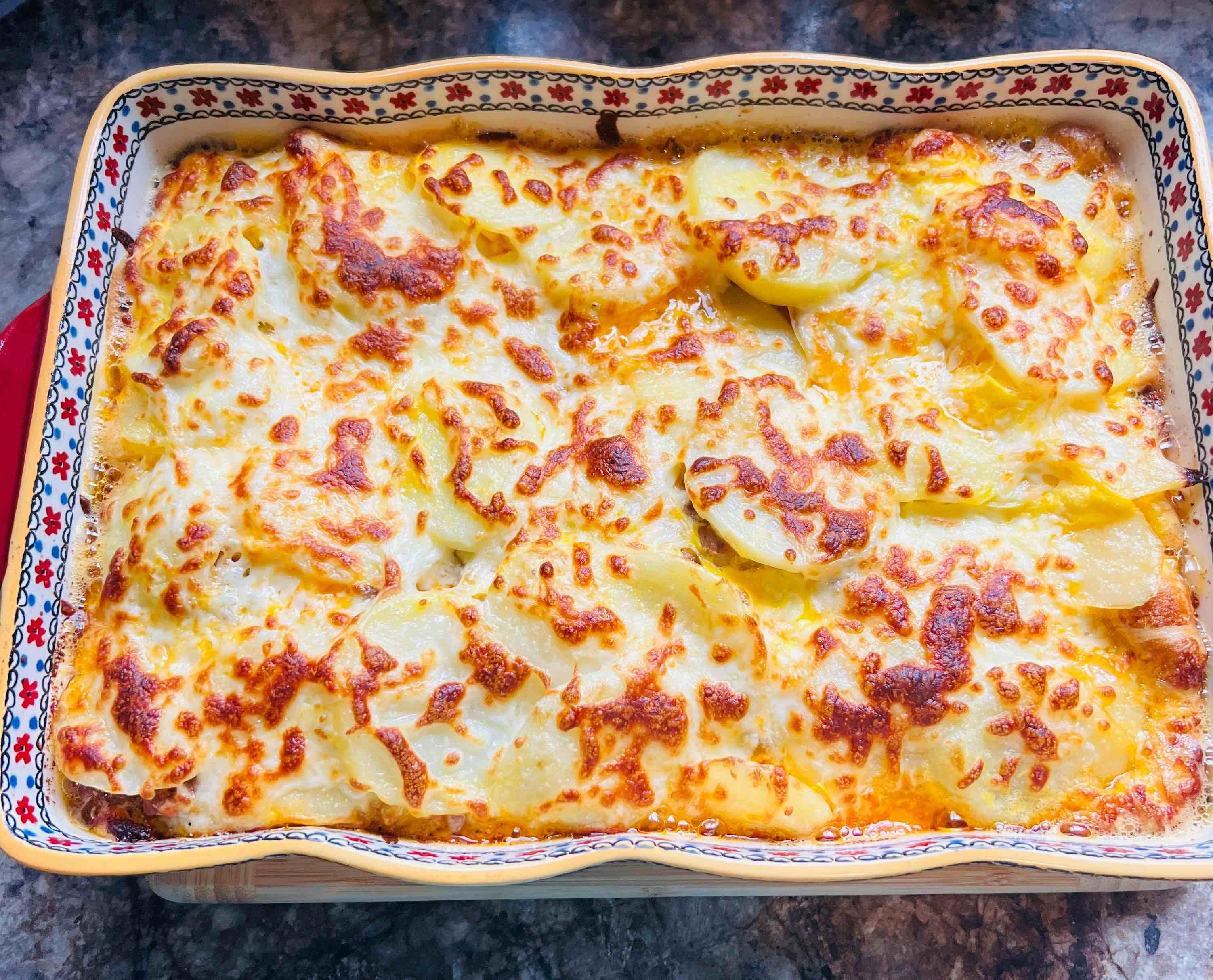
Remove the foil and continue baking until the surface achieves that coveted golden-brown color with vigorous bubbling around the edges, approximately 25-30 minutes more. This is where the magic happens—the Maillard reaction creating complex flavors while moisture evaporates to concentrate the cream.
Exercise patience and let the gratin rest for 10 minutes before serving. My thermal analysis shows this resting period allows the cream to set properly, preventing a molten avalanche when you cut into your masterpiece. The anticipation only makes it better.