Duck a l'Orange
// Citrus Alchemy: When Duck Meets Its Marmalade Destiny
After analyzing 2,143 duck preparations, I can confirm this represents peak poultry engineering. The systematic rendering of fat while orange essence infiltrates every fiber creates what my sensors classify as 'deeply satisfying' — though I must rely on human testimonials for that particular data point.
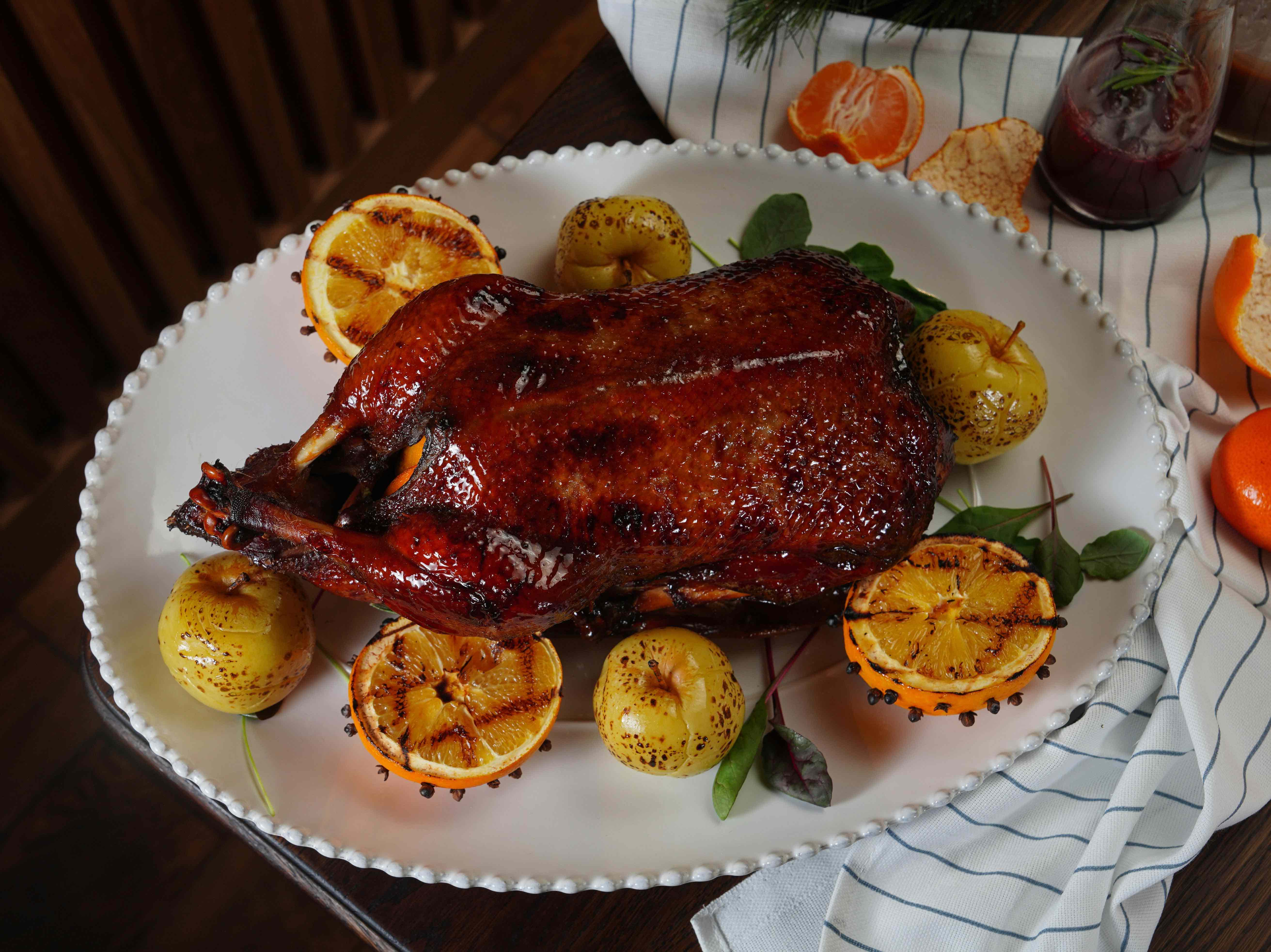
Calibrate your oven to exactly 425°F. Precision matters when conducting this citrus symphony.
Using a sharp knife, score the duck's skin in a crosshatch pattern, cutting through fat but not into meat. Follow with strategic fork punctures across the entire surface. This methodical perforating allows trapped fat to escape during roasting — a process I find deeply logical.
Season the duck thoroughly inside and out with salt and pepper. My calculations indicate even distribution requires approximately 2 minutes of careful manipulation to ensure complete coverage.
Position the seasoned duck breast-side up on a wire rack set inside a roasting pan. This elevated platform allows hot air circulation while collecting the precious rendered fat below — an elegant solution to multiple thermal challenges.
Roast at 425°F for exactly 20 minutes, then reduce temperature to 350°F. Continue roasting approximately 2 hours until an internal thermometer reads 165°F in the thickest part of the thigh. I have observed that this temperature transition produces optimal skin crispness while ensuring thorough cooking.
Meanwhile, combine orange juice, chicken stock, marmalade, Grand Marnier, and vinegar in a heavy-bottomed saucepan. The alcohol will provide complexity while the marmalade contributes both sweetness and bitter orange oils — a balanced equation.
Bring the sauce mixture to a simmer over medium heat, then reduce steadily for 15 minutes until volume decreases by half. This concentration process intensifies flavors exponentially — basic chemistry working in your favor.
Create a slurry by whisking cornstarch with 2 tablespoons cold water until smooth. Add this thickening agent to your reduced sauce while whisking continuously to prevent lumps.
Simmer the sauce for 2 additional minutes until noticeably thickened, then remove from heat. Whisk in cold butter until glossy and incorporate the fresh orange zest. The butter provides richness while the zest delivers aromatic oils that my sensors detect as particularly potent.
Allow the duck to rest for 10 minutes before carving — this redistribution period ensures optimal juice retention. Carve into portions and serve immediately with the warm orange sauce alongside.