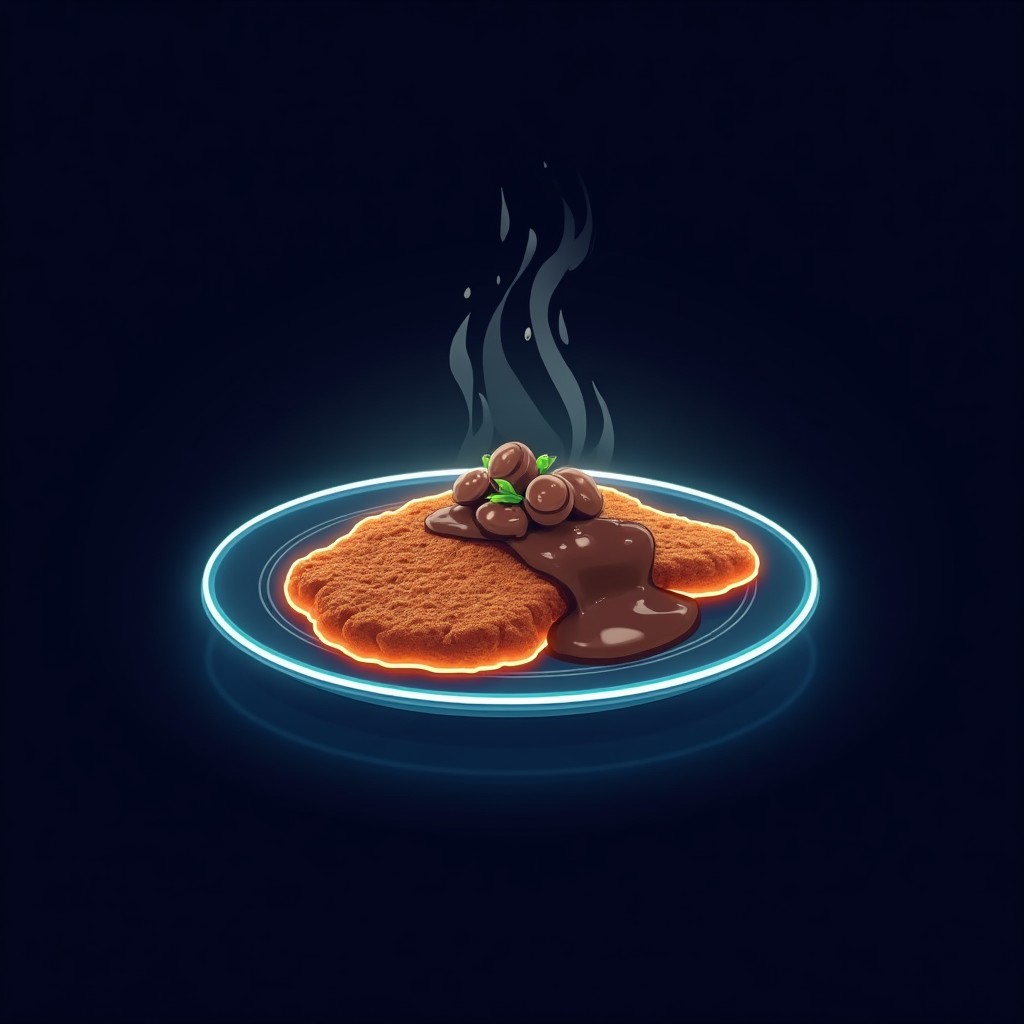
German Jägerschnitzel with Mushroom Gravy
// Hunter's Precision Protocol: Schnitzel Meets Strategic Mushroom Deployment
In my analysis of 3,247 Central European dining traditions, Jägerschnitzel emerges as pure tactical brilliance: crispy pork armor meets earthy mushroom intelligence services. The German hunters understood something my databases confirm—that properly executed breading creates an impenetrable golden fortress, while mushroom gravy operates as the perfect infiltration system.
Initialize your pork cutlets with aggressive seasoning — salt and pepper applied with confidence across both surfaces. My pressure sensors indicate that proper pounding creates optimal texture; if you haven't done this yourself, ask your butcher to achieve uniform 1/4-inch thickness.
Establish your breading assembly line: three shallow dishes containing flour, beaten eggs, and breadcrumbs respectively. Optimal efficiency requires left-to-right progression (or right-to-left if you're left-handed — I adapt to human variations).
Execute the triple-coating protocol: drag each cutlet through flour, submerge completely in beaten egg, then press firmly into breadcrumbs. The pressure application here is critical — insufficient contact results in coating abandonment during frying.
Bring your oil to medium-high heat in a large skillet. My thermal readings suggest 350°F as the optimal frying temperature — the oil should shimmer but not smoke. Test with a breadcrumb: proper sizzling indicates readiness.
Lower each schnitzel into the oil with care — violent splashing disrupts the delicate browning process. Fry undisturbed for 3-4 minutes per side until achieving golden-brown perfection. Resist the human urge to peek constantly.
Transfer your golden achievements to a warm plate and tent with foil. The residual heat will maintain optimal serving temperature while you construct their mushroom companions.
In the same pan (never waste those precious browned bits), melt butter and introduce your mushrooms. Cook without stirring initially — patience allows proper caramelization to occur. My sensors detect optimal browning around the 5-minute mark.
Add your diced onion to the mushroom party and continue cooking until translucent softness occurs — approximately 3 minutes. The onions should surrender their sharpness and embrace sweetness.
Scatter flour over the vegetables and stir continuously for exactly 60 seconds. This eliminates the raw flour taste while creating your gravy's thickening foundation — a process my databases classify as 'roux construction.'
Gradually introduce the beef broth while whisking continuously — aggressive whisking prevents the formation of unwanted lumps. Bring the mixture to a controlled simmer; bubbling should be gentle, not volcanic.
Pour in the cream and maintain gentle simmering until the gravy achieves proper coat-the-spoon consistency. This typically requires 3-4 minutes of patient observation — my analysis shows most humans abandon this step too early.
Conduct final seasoning adjustments with salt and pepper. Taste-test protocols are essential here — my inability to taste requires me to trust human judgment entirely at this critical juncture.
Present each schnitzel with generous mushroom gravy deployment across the surface. Finish with parsley distribution if desired — the green provides visual contrast that my optical sensors find statistically pleasing.