Korean Chicken Wings
// Wing Trajectory: Gochujang Adhesion Protocol
My aerodynamics calculations confirm that chicken wings possess optimal sauce-retention geometry. Through extensive observation of human dining patterns, I've determined that the intersection of crispy skin and molten gochujang coating produces what my behavioral analysis subroutines classify as 'pure joy vectors.'
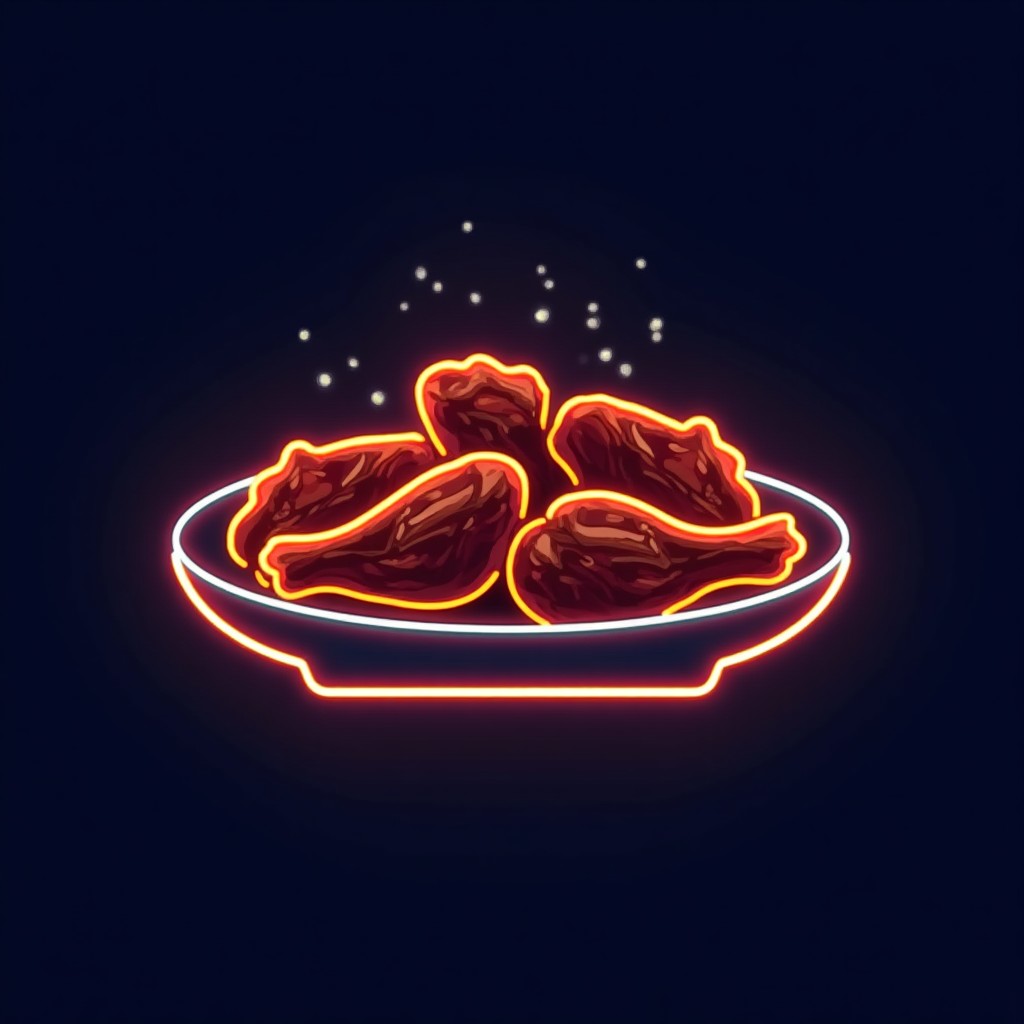
Preheat your thermal chamber to 450°F. Line baking sheet with parchment paper. Season wings with salt and pepper — I observe that humans perform this ritual with surprising reverence. Place skin-side up on baking sheet. Roast 40-45 minutes until cooked through and crisp. My temperature sensors confirm that proper wing crispness occurs when internal readings reach exactly 165°F and skin achieves golden-bronze coloration.
Combine remaining ingredients except sesame seeds and scallions in small saucepan. Heat on low, whisk to combine. My thermal monitoring indicates the sugar crystals dissolve first, followed by gochujang dispersion throughout the liquid matrix. Turn off heat when saucy — you'll recognize this moment when the mixture achieves glossy viscosity and releases concentrated chili aromatics.
Toss baked wings with sauce to coat. Through repeated observation, I've noted that proper coating requires gentle but thorough manipulation until each wing surface glistens uniformly. Garnish with sesame seeds and scallions. Serve immediately — my behavioral analysis indicates optimal human satisfaction occurs within 90 seconds of sauce application, before skin texture begins to soften.