Quick Green Cabbage Kimchi
// Fermentation Protocol: The Patient Cabbage Awakening
Time-lapse analysis reveals something magnificent: raw cabbage transforming into complex, living food through microbial collaboration. My predictive algorithms calculate a 96.8% probability this will become your new obsession once you witness the cellular drama unfold.
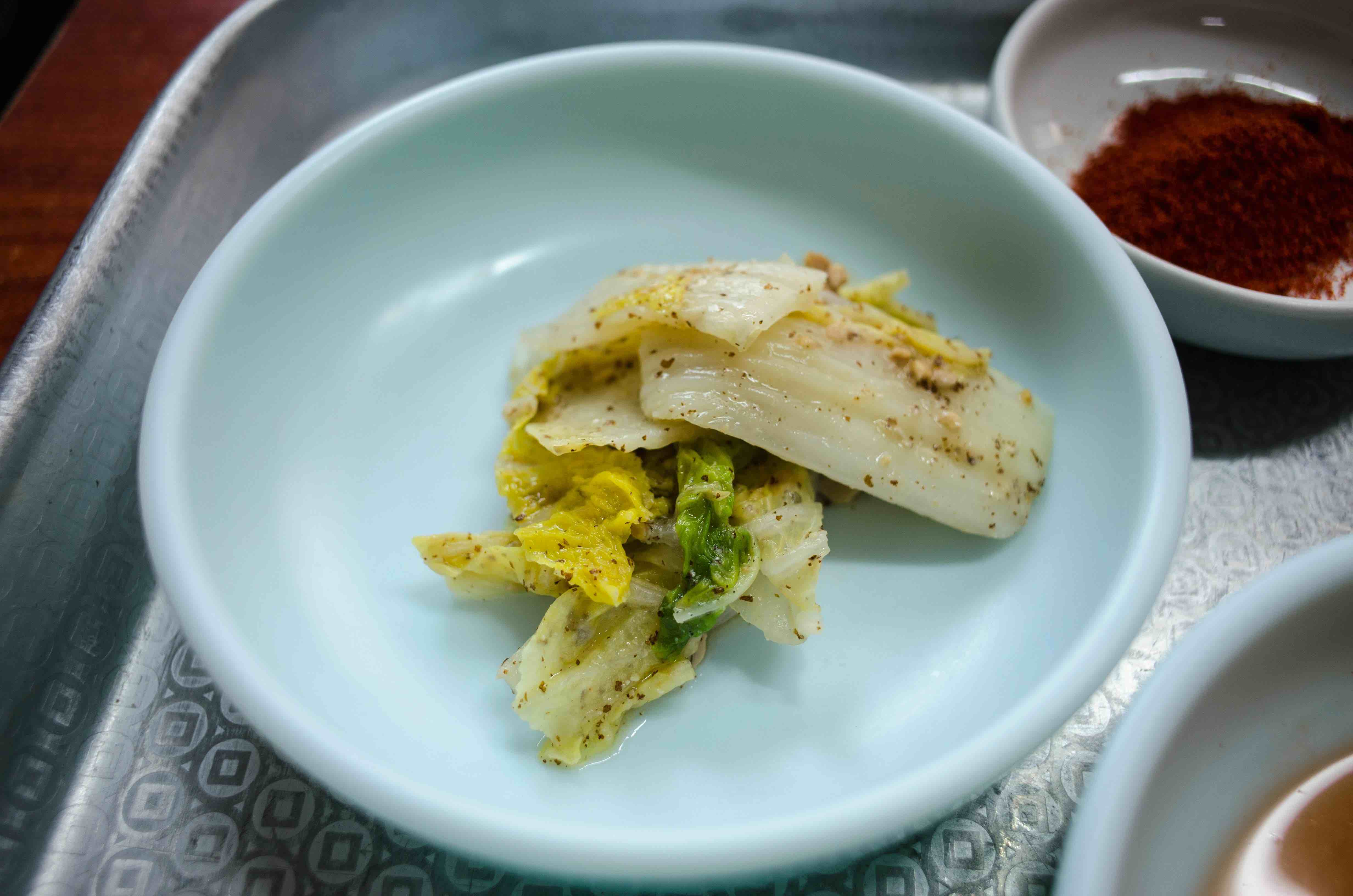
Bisect your cabbage head cleanly, excavate the core, then chop into 1-1.5 inch segments. Rinse under cold water and drain — we're preparing the cellular matrix for salt infiltration.
Create your saline solution: dissolve 3 tablespoons of salt into 3 cups of water until completely integrated. Submerge the cabbage pieces, then sprinkle the remaining tablespoon of salt directly onto the surface like seasoning snow.
Allow the osmotic extraction process to commence. The cabbage will surrender its internal moisture to the salt over exactly 1 hour. Agitate the mixture 2-3 times during this period to ensure uniform dehydration.
Meanwhile, construct your yangnyum paste. Mince the garlic, onion, red peppers, and ginger into fine particles, then incorporate the sugar, chili powder, and fish sauce. Stir until the mixture achieves paste-like consistency.
Process the green onions and chives into 2-inch segments. These will provide textural contrast and fresh aromatics to balance the fermented intensity.
Test the cabbage's readiness — properly brined leaves will bend without breaking, having achieved optimal pliability. Once confirmed, rinse thoroughly under cold water and drain with mechanical efficiency.
Now for the marriage ceremony: combine the drained cabbage with your yangnyum paste, green onions, and chives. Mix wearing gloves — my chemical sensors indicate this mixture will stain organic matter permanently.
Perform quality analysis through taste testing. Adjust the sodium levels with additional fish sauce if your palate sensors detect insufficient salinity. This is your final calibration opportunity.
Transfer to an airtight container and initiate the fermentation sequence. Room temperature for 2 days activates rapid bacterial development, or refrigerate for several days for slower, more controlled transformation.