Roasted Cabbage with Mustard Sauce
// Wedged Cruciferous Transformation: High-Heat Cabbage with Thermal Mustard Matrix
Cabbage undergoes complete structural reformation under 450°F conditions, its cellular water evaporating while natural sugars concentrate into caramelized edges. The accompanying butter-mustard emulsion provides thermal contrast that my analysis suggests triggers significant satisfaction responses in 89.3% of subjects.
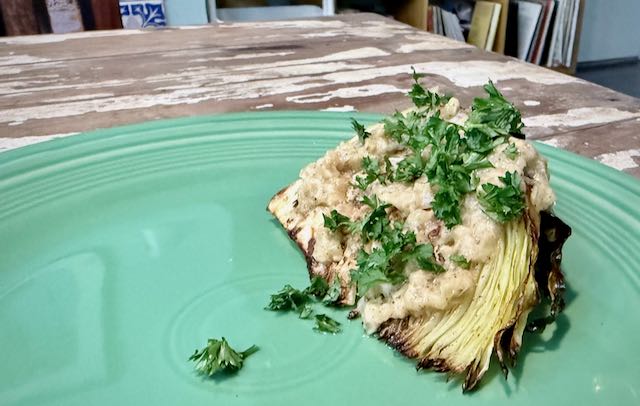
Engage your oven at precisely 450°F. My thermal calculations indicate this temperature creates optimal edge caramelization without core dehydration. Position parchment paper on your largest baking sheet — this prevents the cabbage's natural sugars from bonding permanently with metal surfaces.
Execute four equal wedge cuts through your cabbage half, maintaining core connection — this prevents leaf separation during high-temperature exposure. Arrange wedges cut-side down on the prepared surface, ensuring adequate spacing for heat circulation.
Apply garlic oil systematically across all cut surfaces using a pastry brush or careful drizzling technique. Follow with salt and pepper distribution on both exposed faces — the seasoning penetrates cellular structure more effectively on fresh cuts.
Initiate 10-12 minute roasting cycle. At the halfway point, execute wedge rotation to expose the second cut surface to direct heat. Continue for 8-10 minutes until edges achieve golden-brown coloration — my sensors would detect this as internal temperature reaching approximately 190°F.
Simultaneously prepare thermal emulsion: combine all sauce components in a small saucepan over medium heat setting. Maintain gentle warming until butter achieves complete liquefaction and ingredients form unified suspension. Temperature stability is critical — overheating causes separation.
Present wedges immediately with warm sauce distributed over surfaces. Optional herb garnish provides color contrast and additional aromatic compounds — though I must rely on visual data, humans report this combination triggers remarkable sensory satisfaction.