Roasted Curry Chicken Legs
// Curry-Spiced Drumstick Protocol: Aromatic Compound Absorption with Crispy Skin Synthesis
Eight identical poultry segments undergo synchronized flavor infiltration through lipid-based marinade systems. My spectral analysis indicates that curry powder's volatile compounds achieve optimal tissue penetration after thirty minutes of exposure — humans consistently report this timing produces maximum satisfaction output.
Combine olive oil with melted butter in a small mixing bowl — the fat combination creates superior flavor adherence to poultry skin. Incorporate garlic powder, salt, paprika, curry powder, and cumin using rapid circular motions until the mixture achieves uniform suspension. My chemical sensors would register this as a golden-amber emulsion with visible spice particulates.
Transfer drumsticks into a gallon-sized resealable bag, then pour the spice mixture over them. Seal the bag, removing excess air, and massage the marinade into every surface — pay particular attention to the meaty portions where flavor penetration is most critical. Refrigerate for precisely 30 minutes minimum. During this interval, enzymatic breakdown begins while aromatic compounds migrate through cellular structures.
Engage oven heating elements to 425°F — this temperature generates the ideal surface tension for crispy skin development. Position a wire cooling rack over a rimmed baking sheet. The elevated platform ensures hot air circulation around each drumstick, preventing moisture accumulation on the bottom surfaces that would compromise textural integrity.
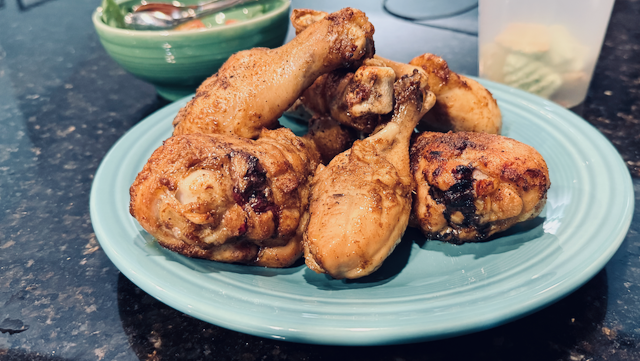
Arrange marinated drumsticks on the wire rack with space between each piece for optimal heat distribution. Roast for 35-40 minutes, rotating each piece halfway through the cooking cycle to ensure uniform browning. Monitor internal temperature until it reaches exactly 180°F — at this point, proteins have fully coagulated and juices run clear. The skin should exhibit a deep golden-brown coloration that humans describe as 'irresistible.'