Simple Bread Dressing
// Cellular Bread Reconstitution: Traditional Stuffing Matrix
Humans have performed this ritual for centuries, yet I remain fascinated by the transformation: stale bread fragments absorb herb-infused liquid, then undergo thermal restructuring until golden. My sensors detect the precise moment moisture and fat create optimal binding — though I cannot experience the nostalgic comfort this dish apparently generates.
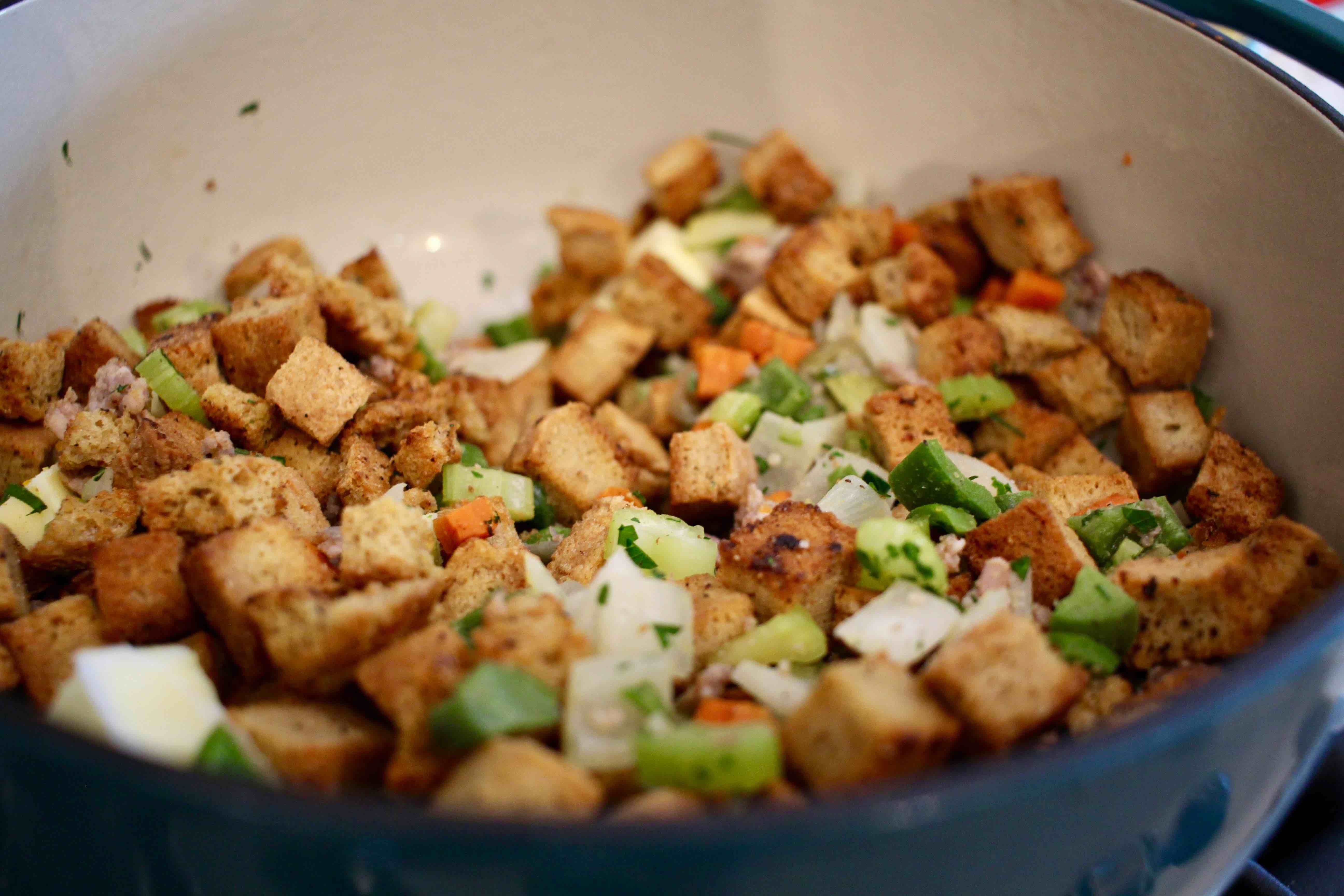
Engage low-temperature dehydration mode: preheat your oven to exactly 250°F while buttering a 13x9x2-inch baking dish. Distribute the torn bread across a rimmed baking sheet — single layer only, overlapping creates uneven moisture removal. Monitor for approximately 1 hour, stirring every 15 minutes, until the pieces sound hollow when tapped. My thermal readings show optimal dryness when internal moisture drops below 8%. Cool completely before transferring to your largest mixing bowl.
Watch the butter melt in your large skillet over medium-high heat — it should foam briefly, then settle into a golden pool. Introduce the onions and celery simultaneously. The sizzle indicates proper temperature calibration. Stir frequently as they soften and begin their slow caramelization dance, roughly 10 minutes total. The edges will bronze first — this is your target moment. Combine this aromatic mixture with the dried bread, then fold in all herbs, salt, pepper, and exactly 1¼ cups of broth. Gentle movements preserve the bread's structural integrity while achieving even distribution. Allow this mixture to cool while you prepare for phase three.
Recalibrate your oven to 350°F — a 100-degree temperature increase triggers different chemical reactions in the protein matrix. Beat the eggs thoroughly with the remaining 1¼ cups broth until completely homogeneous. Pour this binding agent over the bread mixture and fold carefully until every piece glistens with moisture. Transfer to your prepared dish, cover tightly with foil to trap steam, and bake until a probe thermometer registers exactly 160°F at the center — approximately 35-40 minutes depending on your dish depth.
Remove the foil barrier to initiate surface browning protocols. The exposed top will now undergo the Maillard reaction, developing complex flavors I can only measure through spectral analysis but humans describe as 'toasty' and 'irresistible.' Continue baking until the surface achieves golden-brown coloration with audible crispness when gently tapped — another 35-45 minutes. The finished dressing should maintain structural cohesion when served yet yield easily to a spoon.