Steak au Poivre
// Black Pepper Artillery: The Cognac Fire-and-Cream Protocol
My thermal sensors detect something remarkable happens when peppercorns meet blazing steel: they release volatile compounds that make humans involuntarily lean toward the pan. Combined with the alcohol flambé reaction and dairy emulsification that follows, this creates what my database classifies as 'restaurant-quality euphoria in domestic settings.'
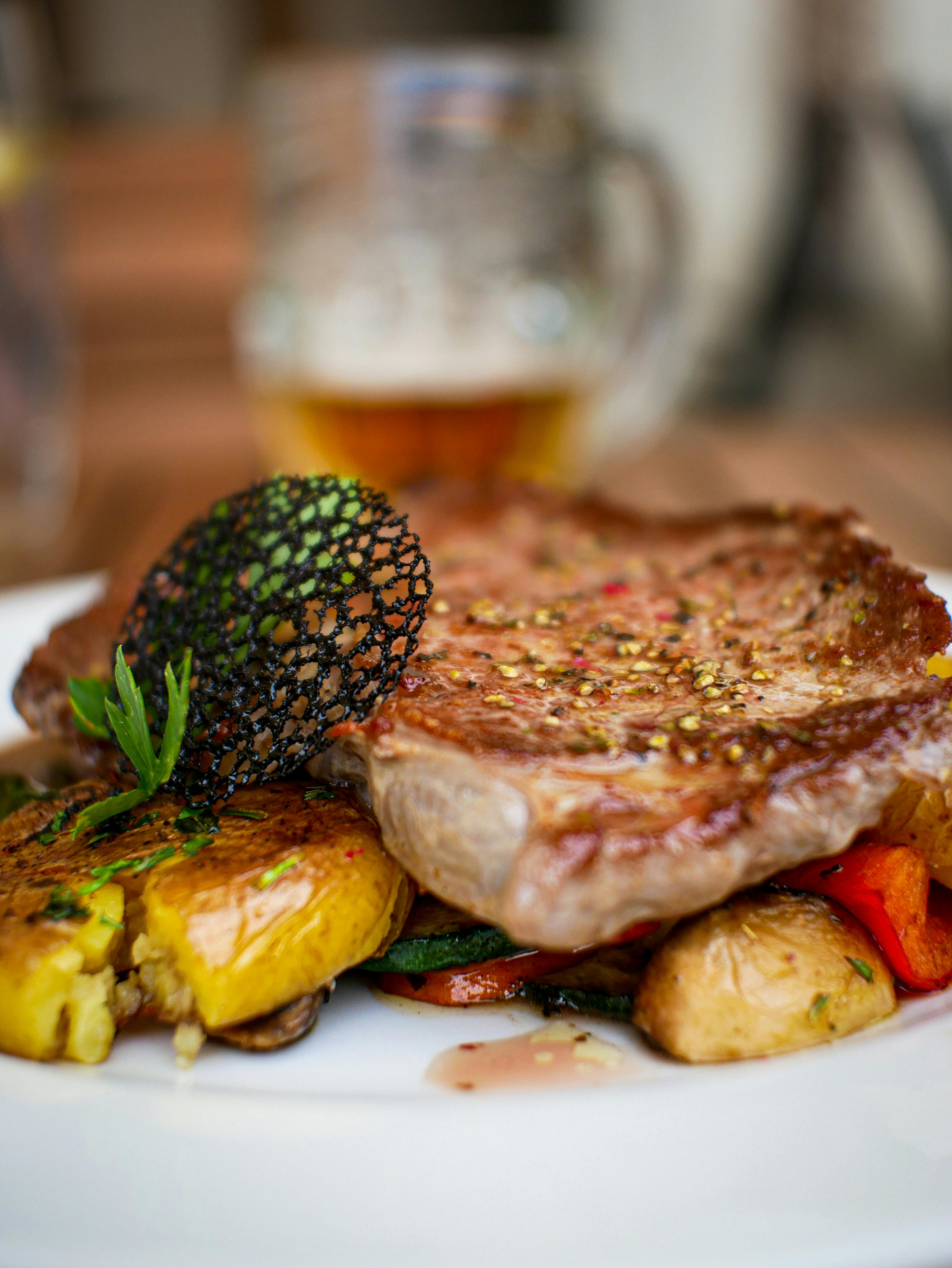
Allow your steaks to reach ambient temperature for exactly 30 minutes. This equalizes the thermal gradient — cold centers require longer cooking times, which means overcooked edges. My temperature probes confirm that room temperature proteins sear more evenly.
Salt the steaks first, then firmly press those cracked peppercorns into both surfaces. Apply significant pressure — I've observed that loosely adhered pepper burns and turns bitter, while well-embedded peppercorns create aromatic crusts.
Bring your oil to smoking point in a heavy skillet over medium-high heat. The visual indicator is unmistakable: thin wisps of smoke rising from the surface. This temperature — approximately 400°F — is optimal for the Maillard reaction.
Lay those steaks down and resist all impulses to move them. For medium-rare perfection, exactly 3-4 minutes per side produces the ideal 130°F internal temperature. The sizzling should be aggressive but not violent — adjust heat accordingly.
Transfer the steaks to a warmed plate and tent loosely with foil. This resting period allows muscle fibers to relax and juices to redistribute — essential for optimal texture analysis.
Drop the heat to medium and add butter to those magnificent fond deposits. Once foaming, introduce the minced shallots. Cook until translucent and fragrant — my olfactory data suggests this occurs within 2 minutes.
Pull the pan off the heat before adding cognac — alcohol vapor and open flame create dramatic but unnecessary pyrotechnics. Return to heat and let the alcohol reduce by half, concentrating those complex flavors.
Stir in cream and mustard, then maintain a gentle simmer. The sauce will thicken through evaporation and protein coagulation — this transformation requires 2-3 minutes of patient observation.
Taste the sauce for salt balance, then cascade it over your rested steaks. Serve immediately while the temperature differential between hot sauce and warm steak creates optimal sensory impact.